410 Santa Maria, Irvine, CA 92606
E-mail us: [email protected]
24 Hour Service - 7 Days a Week

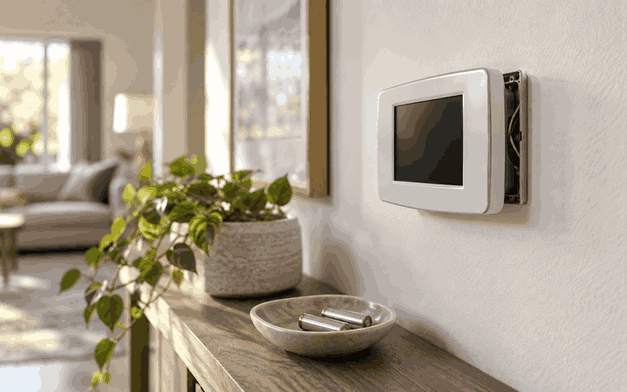
A thermostat not working can appear as a blank screen, incorrect temperature reading, unresponsive controls, or an HVAC system that does not start when heating or cooling is requested.
A thermostat that is not working may have a blank display, inaccurate temperature readings, unresponsive controls, or trouble activating heating and cooling equipment.
Possible causes include depleted batteries, incorrect settings, interrupted low-voltage power, faulty wiring, sensor problems, or HVAC safety shutdowns.
A thermostat controls the system, but it is not always responsible when heating or cooling stops. The symptoms help determine whether the problem involves the device or connected equipment.
A blank thermostat display may indicate depleted batteries, an improperly seated faceplate, interrupted control power, or another HVAC electrical problem.
Depending on the system, possible causes include a 24-volt transformer, control-board fuse, damaged wiring, or activated condensate safety switch.
Some cooling systems use a float switch that interrupts operation when condensate cannot drain correctly.
Replace batteries only when the manufacturer permits it. If the screen remains blank, professional electrical diagnosis may be necessary.
Never bypass safety switches or connect thermostat wires together to restore operation.
First, confirm the thermostat is set to Heat or Cool, as appropriate.
Select a temperature that actually calls for heating or cooling, and review programmed settings or temporary holds.
Many HVAC systems have protective startup delays, so allow several minutes after changing settings.
If the thermostat responds but the equipment does not, the problem may involve electrical controls, safety circuits, equipment power, or communication failures rather than the thermostat itself.
A thermostat exposed to direct sunlight, drafts, nearby appliances, or supply-air vents may measure temperatures that do not represent the room.
A defective sensor can cause similar problems.
Compare the displayed reading with a reliable room thermometer under similar conditions.
Persistent, significant differences may require sensor or placement evaluation.
Short cycling occurs when HVAC equipment repeatedly starts and stops without completing normal operating cycles.
Possible causes include poor thermostat placement, sensor problems, wiring faults, airflow restrictions, or equipment safety controls.
Replacing the thermostat without examining the HVAC system may leave the underlying malfunction unresolved.
Complete only manufacturer-approved user-level checks:
Confirm Heat or Cool mode and the selected temperature.
Check replaceable batteries when applicable.
Review programmed settings, operating holds, and schedules.
Confirm that a user-removable faceplate is seated correctly.
Check the HVAC breaker once if safe. Leave it off if it trips again.
Inspect the accessible air filter for severe restrictions.
Allow time for normal equipment startup delays.
Do not remove connected wiring, bridge terminals, or open energized HVAC panels.
Stop troubleshooting if wiring appears burned or wet, or the equipment produces sparks or a persistent electrical burning odor.
Modern smart thermostats may display warnings involving low-voltage power, temperature sensors, equipment communication, configuration, or network connectivity.
An offline or Wi-Fi warning does not always mean heating and cooling have stopped. Some devices continue local temperature control without internet access.
Certain smart thermostats require a C-wire or another approved continuous-power arrangement. Low-power warnings may involve compatibility, wiring, or HVAC control components.
Before clearing an alert, record the complete message, device model, selected operating mode, and equipment response.
Error messages vary by manufacturer. Avoid repeated resets that erase useful diagnostic information.
A functioning thermostat cannot compensate for a failed furnace, inactive outdoor condenser, blown control fuse, or protective shutdown.
If the thermostat calls for cooling but warm air continues circulating, review AC Not Cooling: Common Causes and Safe Checks.
Airflow, refrigeration, or electrical problems may require professional AC repair.
When the heating system does not respond, read Heater Not Working: Safe Checks and Repair Signs.
Ignition, power, airflow, or safety-control failures may require heating repair.
If you smell gas or a carbon monoxide alarm activates, leave the affected area and follow emergency procedures.
When neither system responds, the issue may involve a shared transformer, wiring, control board, or electrical supply.
Professional HVAC repair and diagnostics can help identify the source.
Repair may be appropriate when the problem involves correctable configuration, mounting, wiring, or connection faults.
Replacement may be necessary for failed internal sensors, unreliable controls, physical damage, or equipment incompatibility.
Not every smart thermostat works with every HVAC system.
Compatibility depends on wiring, heating and cooling stages, heat-pump requirements, auxiliary heating, zoning, and proprietary communication systems.
An incorrectly matched thermostat can create new operating problems.
Professional thermostat repair is appropriate when:
The display repeatedly loses power
Heating or cooling does not respond
Room temperatures are consistently inaccurate
Equipment cycles abnormally
Error messages repeatedly return
Wiring or electronic-control problems are suspected
A technician can check thermostat settings, low-voltage controls, wiring, equipment response, and safety circuits before recommending repair or replacement.
Keep the device clear of heat sources, avoid blocking nearby airflow, and follow manufacturer instructions for batteries and programming.
Regular AC maintenance can help identify equipment conditions that resemble thermostat faults.
The article How Often Should an HVAC System Be Serviced? explains preventive-care intervals.
The device may have lost HVAC control power because of a transformer, control fuse, wiring, or safety-switch problem.
Many systems use protective startup delays. If the equipment never responds, diagnosis may be needed.
Yes. Incorrect settings or sensing can increase operating time. Our High Electric Bill When AC Is Running Guide explains other contributing factors.
For professional thermostat diagnostics, control troubleshooting, and repair, contact Reliable Hands Appliance.
Phone: +1 (714) 338-9438
Email: [email protected]
Office Hours: Monday through Friday, 7:00 AM to 7:00 PM
Saturday: 9:00 AM to 6:00 PM
Sunday is reserved for emergency calls. Call to confirm availability.
Office: 410 Santa Maria, Irvine, CA 92606
Time Zone: Pacific Time

