410 Santa Maria, Irvine, CA 92606
E-mail us: [email protected]
24 Hour Service - 7 Days a Week

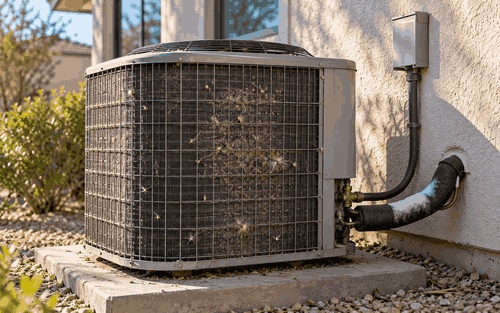
An AC that runs but does not cool properly may have a simple airflow problem, a thermostat issue, a frozen coil, failed electrical component, outdoor-unit fault, or refrigerant-related problem.
An air conditioner that runs but does not cool may have an incorrect thermostat setting, restricted airflow, dirty coils, frozen evaporator, failed electrical component, or refrigerant-system problem.
Typical symptoms include warm air from vents, weak cooling, longer operating cycles, and indoor temperatures that remain above the thermostat setting.
Before assuming the compressor has failed, begin with safe external checks. Several cooling problems produce similar symptoms and require different repairs.
Set the thermostat to Cool and choose a temperature below the current room temperature.
Review programmed settings, temporary holds, and replaceable batteries if applicable.
A working display does not necessarily mean the outdoor cooling equipment is operating correctly.
If the thermostat remains blank, reports inaccurate temperatures, or fails to respond, read Thermostat Not Working: Common Causes and Safe Checks.
A clogged air filter restricts airflow and can reduce cooling performance or contribute to evaporator icing.
Replace a visibly dirty accessible filter using the correct manufacturer-approved type.
Make sure supply vents and return grilles are not blocked by furniture, curtains, or stored items.
Do not operate the system without its required filter.
If the AC breaker has tripped, follow the manufacturer's instructions and reset it no more than once, provided it is safe and there are no signs of electrical damage.
If the breaker trips again, leave it off and request qualified assistance.
Repeated trips may indicate an electrical or equipment fault.
Check whether leaves, vegetation, or visible debris restrict the area around the outdoor condenser.
Remove only loose debris that can be reached without opening panels or touching internal components.
If the indoor blower runs while the outdoor cooling equipment remains inactive, professional diagnosis may be necessary.
Ice on the indoor coil or refrigerant lines may result from restricted airflow, blower problems, dirty components, or refrigeration faults.
Turn cooling off and allow the equipment to thaw according to manufacturer instructions.
Do not chip or scrape ice from the coil.
If icing returns, the underlying fault requires investigation.
Electrical components help start motors, regulate equipment power, and move air through the system.
A failed capacitor, contactor, or fan motor may prevent normal cooling even when the thermostat appears functional.
Unusual buzzing, startup problems, or unexpected shutdowns may accompany these faults.
Capacitors can retain dangerous electrical charges after power is disconnected. Electrical testing belongs to qualified technicians.
An air conditioner uses a closed refrigerant system and does not normally consume refrigerant.
A leak or incorrect charge may cause weak cooling, extended runtime, or evaporator icing.
Adding refrigerant without identifying the underlying problem is not an appropriate repair.
Sealed-system inspection and refrigerant handling require qualified personnel.
The outdoor condenser releases heat absorbed from the property.
Heavy dirt buildup, inadequate clearance, fan problems, or electrical faults can interfere with heat rejection.
Professional inspection helps distinguish a cleaning issue from a component failure.
Some modern air conditioners, heat pumps, and communicating thermostats display equipment warnings or fault codes.
These may concern sensors, communication, outdoor-unit operation, motors, electrical protection, or condensate safety devices.
There is no universal HVAC error-code system. Record the exact message, equipment model, and operating symptoms before clearing an alert.
If the warning involves thermostat communication, sensing, or control wiring, professional thermostat repair may be appropriate.
Avoid repeatedly resetting equipment or replacing components based only on a generic code description.
Professional AC repair is appropriate when cooling remains insufficient after basic checks.
Warning signs include:
Ice returning after thawing
Repeated breaker trips
Outdoor equipment failing to start
Unusual buzzing, grinding, or rattling
Water near indoor electrical components
Cooling performance continuing to decline
A technician can examine airflow, thermostat response, fans, coils, electrical controls, condensate drainage, and refrigeration operation.
Complex problems involving connected heating and cooling components may require broader HVAC system diagnostics.
If failures recur, the article Repair or Replace Your HVAC System explains factors to evaluate before considering replacement.
When replacement is justified, professional AC installation should account for capacity, airflow, compatibility, and property requirements.
Replacing accessible filters, keeping vents clear, and maintaining outdoor-unit clearance can reduce avoidable airflow restrictions.
Professional AC maintenance may include coil, electrical, drainage, airflow, and operating-performance checks.
Read How Often Should an HVAC System Be Serviced? for maintenance guidance.
If cooling performance declines while electricity use increases, our High Electric Bill When AC Is Running Guide explains related efficiency concerns.
Turn cooling off if ice forms, the system produces a burning odor, makes severe noises, or repeatedly trips its breaker.
Yes, if restricted airflow is the main problem. A new filter will not repair a failed motor, refrigerant leak, or electrical component.
The indoor fan can circulate air even when the outdoor unit or refrigeration system is malfunctioning. Diagnosis should identify which system has failed.
For professional air conditioning diagnostics and repair, contact Reliable Hands Appliance.
Phone: +1 (714) 338-9438
Email: [email protected]
Office Hours: Monday through Friday, 7:00 AM to 7:00 PM
Saturday: 9:00 AM to 6:00 PM
Sunday is reserved for emergency calls. Call to confirm availability.
Office: 410 Santa Maria, Irvine, CA 92606
Time Zone: Pacific Time
Set the thermostat to `Cool` and choose a temperature below the current room temperature. If the thermostat uses batteries, replace them when the display is blank or unstable. Make sure a programmed schedule has not changed the setpoint.
### Inspect the air filter
A heavily loaded filter restricts airflow. Reduced airflow can weaken cooling and may contribute to ice forming on the indoor coil. Replace the filter with the correct size and type if it is visibly dirty. Do not operate the system without a filter.
### Check vents and returns
Open supply vents and make sure furniture, boxes, curtains, or rugs are not blocking return grilles. Closing too many vents does not redirect cooling efficiently and can create airflow and pressure problems.

