410 Santa Maria, Irvine, CA 92606
E-mail us: [email protected]
24 Hour Service - 7 Days a Week

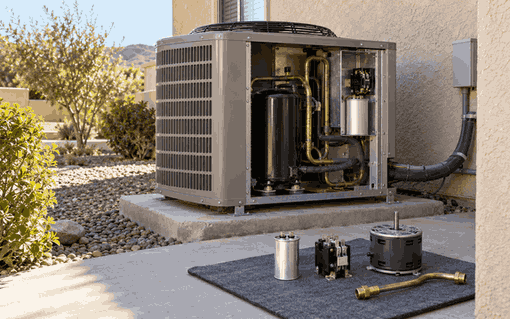
The ideal interval depends on equipment type, age, operating hours, environment, manufacturer guidance, and the property’s comfort or operational requirements. Commercial equipment, older systems, and units that run heavily may need more frequent attention.
Most residential HVAC systems should receive professional maintenance at least once a year. Properties using both heating and cooling may benefit from separate seasonal inspections: one before heavy air-conditioning use and another before the heating season.
However, the ideal HVAC maintenance frequency depends on equipment type, age, operating hours, environmental conditions, and manufacturer recommendations.
Commercial equipment and heavily used residential systems may require more frequent inspections.
Professional AC maintenance is commonly arranged before periods of sustained warm-weather operation.
An inspection may identify:
Dirty evaporator or condenser coils
Restricted airflow
Condensate drainage problems
Worn electrical components
Abnormal fan operation
Thermostat and control issues
Addressing developing problems before peak cooling demand may reduce unexpected interruptions.
Professional heating maintenance is generally most useful before regular heating operation begins.
Depending on the equipment, an inspection may include ignition performance, airflow, electrical connections, heating controls, operating cycles, and safety devices.
A heat pump providing both heating and cooling may benefit from separate seasonal evaluations because it operates throughout much of the year.
A maintenance checklist should reflect the equipment's configuration and manufacturer requirements.
Typical inspections may include:
Thermostat operation and temperature settings
Accessible filters and airflow
Indoor blower and outdoor fan performance
Evaporator and condenser condition
Electrical controls and connections
Condensate drainage and safety switches
Unusual noises or vibration
System operating temperatures
Refrigeration performance when appropriate
A technician may also identify visible ductwork problems and document components showing signs of deterioration.
If your thermostat repeatedly loses power or provides inaccurate readings, review Why Is My Thermostat Not Working?.
Preventive maintenance helps identify developing problems but cannot guarantee that equipment will never fail.
There is no universal air-filter replacement interval.
Filter life depends on filter design, equipment runtime, occupancy, indoor air quality, and manufacturer instructions.
Filters may require more frequent attention in properties with:
Pets or significant airborne hair
Construction or renovation dust
Smoke or heavy particulate exposure
High occupancy
Extended HVAC operation
Inspect accessible filters regularly and replace them when dirty according to the equipment requirements.
Avoid installing an incompatible filter or operating the system without its required filtration.
Older HVAC systems may benefit from additional inspection when they have experienced recurring breakdowns, declining airflow, abnormal cycling, drainage problems, or increasing vibration.
However, equipment age alone does not determine the correct maintenance interval.
A well-maintained older system may require a different approach from a newer unit with repeated operating problems.
Commercial systems may operate for extended hours and experience greater exposure to dust, outdoor debris, or heavy occupancy.
Maintenance planning should consider:
Operating hours and workload
Equipment accessibility
Rooftop or outdoor exposure
Previous failures
Business-critical heating and cooling requirements
Two HVAC systems installed in the same year may have different maintenance needs because their workloads are different.
HVAC maintenance focuses on preventive inspection, cleaning, adjustments permitted by the manufacturer, and monitoring equipment condition.
HVAC repair addresses an existing malfunction.
An air conditioner that runs without cooling may have electrical, airflow, or refrigeration problems. Read AC Not Cooling: Common Causes and Safe Checks or request professional AC repair.
Similarly, a furnace or heat pump that cannot produce adequate warmth may require heating repair, not routine maintenance.
For related symptoms, review Heater Not Working: Common Causes and Safe Checks.
When the problem involves multiple connected systems, professional HVAC diagnostics may be appropriate.
Changes in system performance can indicate maintenance concerns or an existing fault.
Watch for:
Longer heating or cooling cycles
Weak or uneven airflow
Frequent starting and stopping
Unusual noises or vibration
Water near indoor equipment
Rooms becoming difficult to heat or cool
Unexpected increases in electricity consumption
For energy-related symptoms, read Why Is My Electric Bill So High When the AC Is Running?.
Stop operating equipment that produces smoke, sparks, strong burning odors, or repeated electrical faults. Gas odors and carbon monoxide alarms require emergency action.
Annual inspection is a reasonable starting point for many residential systems. Equipment may develop airflow, electrical, or drainage problems before noticeable failure occurs.
Generally, yes, subject to manufacturer guidance. New equipment still requires filter care and appropriate operating checks.
Homeowners can replace accessible filters and keep vents clear. Electrical testing, refrigerant handling, and combustion-system inspection require qualified personnel.
No. Maintenance may reduce avoidable problems and identify developing wear, but unexpected component failures can still occur.
For professional HVAC maintenance, seasonal inspections, and heating and cooling system care, contact Reliable Hands Appliance.
Phone: +1 (714) 338-9438
Email: [email protected]
Office Hours: Monday through Friday, 7:00 AM to 7:00 PM
Saturday: 9:00 AM to 6:00 PM
Sunday is reserved for emergency calls. Call to confirm availability.
Office: 410 Santa Maria, Irvine, CA 92606
Time Zone: Pacific Time

