410 Santa Maria, Irvine, CA 92606
E-mail us: [email protected]
24 Hour Service - 7 Days a Week

Preventive heating maintenance checks airflow, thermostat response, electrical components, equipment condition, cycling, and developing problems before heavy seasonal use.
Heating maintenance is a planned inspection and operational review intended to identify wear, airflow restrictions, control problems, and unsafe or unreliable behavior before the system enters periods of heavier use.
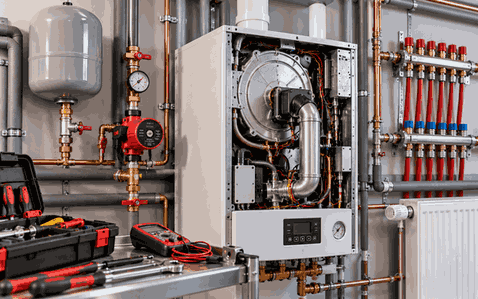
Heating maintenance is a planned inspection and operational review intended to identify wear, airflow restrictions, control problems, and unsafe or unreliable behavior before the system enters periods of heavier use.
Reliable Hands Appliance provides professional heating system maintenance for homes, managed properties, offices, retail spaces, and other businesses throughout Orange County, including Irvine, Costa Mesa, Newport Beach, Santa Ana, and Tustin.
Heating maintenance is a planned inspection and operational review intended to identify wear, airflow restrictions, control problems, and unsafe or unreliable behavior before the system enters periods of heavier use.
Maintenance is intended for operating equipment. A heating system that will not start, repeatedly shuts down, or creates a safety concern requires heating repair diagnosis rather than routine maintenance.
Call (714) 338-9438 to confirm heating maintenance availability for the equipment at your property.
The exact maintenance scope depends on the heating system type, fuel or energy source, equipment condition, accessibility, and manufacturer guidance.
Professional heating maintenance may include:
Reviewing thermostat settings and heating response
Inspecting accessible heating equipment and controls
Checking filters and visible airflow conditions
Observing blower, fan, and cycling behavior
Examining accessible electrical connections
Checking for unusual noise, vibration, odor, or visible wear
Reviewing temperature delivery and system shutdown
Inspecting accessible drainage when the system produces condensate
Documenting conditions that require repair or further evaluation
Availability for fuel-burning, rooftop, specialty, or large-capacity systems is confirmed based on equipment details before an appointment is arranged.
Changes in system performance can indicate developing airflow, control, electrical, mechanical, or equipment problems.
Arrange professional attention when you notice:
Slow or uneven heating
Weak airflow from multiple vents
Frequent starting and stopping
A system that runs longer than usual
New rattling, buzzing, scraping, or vibration
Persistent unusual odors
Thermostat and room temperatures that do not agree
Unexpected shutdowns or error messages
Water near the heating equipment
A sudden change from previous seasonal operation
Heating maintenance may uncover a developing issue, but an active equipment failure requires professional diagnosis and an approved repair scope.
Safety concerns should not be treated as routine heating maintenance.
Stop operating the heating system when there is:
Smoke
Visible electrical damage
Repeated breaker interruption
A strong burning odor
If a gas odor is present, avoid flames and electrical switches, leave the affected area, and follow the property's emergency procedures or contact the utility from a safe location.
If a carbon monoxide alarm activates, leave the property and follow the alarm manufacturer's instructions. Contact emergency services or the appropriate utility when required.
An active carbon monoxide alarm is not a routine heating maintenance situation.
Do not open combustion, electrical, or control compartments to perform a homeowner inspection.
Reliable Hands Appliance reviews maintenance requests for common residential heating equipment as well as qualifying light-commercial systems.
Requests may involve:
Common residential heating systems
Heat pumps operating in heating mode
Ducted heating equipment
Thermostat and control systems
Accessible airflow and filtration components
Because heating systems differ in design, provide the model information, energy source, equipment placement, and property type whenever possible.
Qualifying commercial heating maintenance may involve offices, retail spaces, managed properties, and other business environments.
Commercial callers should provide information about:
Operating hours
Tenant coordination requirements
Roof or mechanical-room access
Security procedures
Equipment location
Areas served by the heating system
Equipment type and capacity
Fuel or energy source
Specialized commercial heating equipment is reviewed individually to confirm maintenance availability.
Heating maintenance is commonly performed before regular seasonal use, allowing the system to be inspected under planned operating conditions before demand increases.
The appropriate maintenance interval depends on:
Equipment type
System runtime
Property occupancy
Environmental conditions
Manufacturer recommendations
Filter conditions
Previous system performance
Properties with heavy system usage, elevated dust levels, recent construction activity, or demanding commercial operating conditions may require more frequent filter attention or professional evaluation.
A technician can recommend a practical maintenance interval after reviewing the heating system and its operating conditions.
Proper access helps the technician inspect the relevant heating equipment and controls efficiently.
Before the appointment, provide clear and safe access to:
The thermostat
Heating equipment
Filters
Electrical disconnect areas
Attics
Closets
Roof access
Mechanical rooms
Secure pets and provide any necessary gate, parking, key, security, or property-management instructions.
Tell the technician about previous repairs, unusual noises, odors, cold rooms, shutdowns, alarm history, or noticeable changes in airflow.
Do not dismantle heating equipment in an attempt to locate the data plate or internal components.
A no-heat condition requires heating repair and professional diagnosis.
The underlying fault may be straightforward, but routine heating maintenance should not be presented as a substitute for repair when the system has already failed.
Heat-pump maintenance requests can be evaluated.
Provide the system type and complete model information so the appropriate maintenance scope can be confirmed.
Commercial heating requests are accepted for review.
Equipment type, capacity, placement, accessibility, property requirements, and fuel source help determine maintenance availability.
No. Heating maintenance can identify observable conditions, developing issues, airflow concerns, and other factors that may affect operation.
However, maintenance cannot prevent every future component failure.
Contact Reliable Hands Appliance with the property address, heating system type, energy source, equipment location, operating concerns, and access instructions.
Reliable Hands Appliance
Office: 410 Santa Maria, Irvine, CA 92606
Phone: +1 (714) 338-9438
Email: [email protected]
Hours: Monday-Friday, 7:00 AM-7:00 PM; Saturday, 9:00 AM-6:00 PM
Sunday: Emergency calls only; call to confirm availability
Time Zone: Pacific Time

