410 Santa Maria, Irvine, CA 92606
E-mail us: [email protected]
24 Hour Service - 7 Days a Week

Professional washing machine repair for water-fill, drainage, spinning, vibration, leaks, motor, door-lock, sensor, and control problems across Orange County. Washing Machine Repair Services
Professional washing machine repair identifies and corrects water-fill, drainage, agitation, spin, electrical, control, and leak-related failures
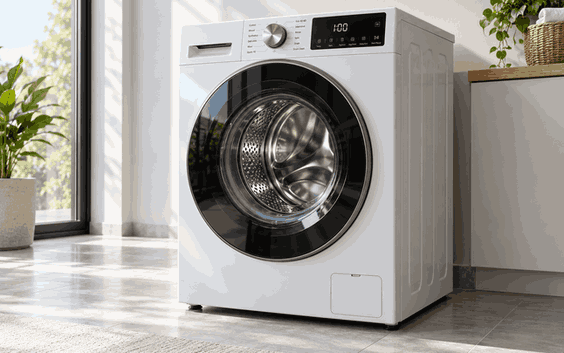
Reliable Hands Appliance provides residential washing machine diagnostics and repair throughout Orange County, working with front-load, top-load, compact, stackable, and premium laundry equipment.
A washer that stops during a wash cycle, fails to remove water, shakes excessively, or leaves clothing unusually wet may have a mechanical fault, electrical problem, or incorrect operating condition.
Effective diagnosis examines the complete appliance rather than treating every visible symptom as evidence of a specific defective component.
Water-related malfunctions may develop in supply valves, hoses, pumps, filters, seals, pressure-sensing systems, or electronic controls.
A washing machine that retains water after a cycle may have an obstructed pump filter, kinked drain hose, clogged household drain, defective drain pump, damaged wiring, or faulty control system.
For a more detailed explanation of common causes and safe preliminary checks, see Why Is My Washing Machine Not Draining.
Avoid repeatedly restarting a washer containing standing water. The cause should be identified before further operation.
Insufficient filling may result from restricted household water supply, clogged inlet screens, damaged supply hoses, defective inlet valves, pressure-sensing faults, or electronic control issues.
Professional testing helps determine whether the restriction originates at an external water connection or inside the appliance.
Leaks may originate from inlet hoses, drainage connections, pump assemblies, detergent dispensers, door boots, internal seals, or excessive detergent suds.
The leak location and the point in the wash cycle when water appears can help narrow the diagnosis.
Active leaks should be addressed promptly to reduce the risk of damage to surrounding floors, cabinetry, and electrical components.
A washing machine requires stable load distribution, functioning suspension components, and coordinated drive-system operation to wash and spin correctly.
A failed spin cycle may involve an unbalanced load, inappropriate cycle setting, door-lock fault, defective lid switch, worn belt, damaged motor, speed sensor, or electronic control problem.
The related washing machine not spinning guide explains how drainage, load balance, and mechanical faults can interrupt normal spinning.
Professional inspection is appropriate when the problem persists after manufacturer-recommended external checks.
Severe vibration may be associated with improper leveling, overloaded laundry, transport bolts left installed, worn suspension rods, defective shocks, damaged bearings, or structural wear.
Continued operation when the washer moves violently can damage surrounding surfaces and internal components.
If a washing machine fills normally but fails to begin washing, the technician may examine the drive motor, belt, coupling, transmission, actuator, sensors, or electronic control system.
Different front-load and top-load designs require different diagnostic procedures.
Reliable Hands Appliance diagnoses washing machines that:
Will not start
Stop unexpectedly during washing
Keep the door locked after the program
Display error codes
Repeat the same cycle stage
Fail to dispense detergent
Leave laundry excessively wet
Do not finish the selected program
Have unresponsive control panels
Smart washers may also require evaluation of connected controls, sensors, and electronic operating states.
An error message can help identify the affected system, but a code alone does not establish which component needs replacement.
Reliable Hands Appliance works with conventional residential washers and many modern laundry configurations.
Front-load washing machines
Traditional top-load washers
High-efficiency top-load washers
Impeller washing machines
Agitator washing machines
Compact apartment washers
Stackable washing machines
Smart and Wi-Fi-connected washers
Premium laundry equipment may incorporate advanced water-level sensors, electronic motor controls, internal water heaters, recirculation systems, and automatic detergent dispensers.
These features require model-specific diagnostic procedures, particularly when multiple systems produce similar fault messages.
All-in-one washer-dryer combinations have integrated washing and drying functions and may need a different repair approach.
For laundry systems with separate appliances, faults involving heating, drying airflow, or dryer drum operation are covered under Dryer Repair.
Depending on the reported symptoms and appliance design, professional diagnosis may involve examination of:
Drain pump
Water inlet valves
Pressure sensor
Flow meter
Door lock
Lid switch
Drive motor
Drive belt
Clutch
Actuator
Rotor
Stator
Suspension system
Bearings
Heating circuit
Detergent dispenser
Wiring
User interface
Main control board
Technicians may also assess appliance leveling, visible hose routing, drainage connections, and load-related conditions.
These external factors can sometimes cause symptoms resembling internal mechanical or electronic failures.
Reliable Hands Appliance works with residential washing machines from Samsung, GE, LG, Whirlpool, Maytag, Kenmore, Bosch, Miele, Frigidaire, Fisher & Paykel, and Speed Queen.
Different models from the same manufacturer may use different motors, pumps, sensors, locks, and control systems.
Providing the complete model number helps the team determine whether the required technical information and compatible replacement components are available.
Professional washing machine repair begins with a description of the reported malfunction and the operating conditions under which it occurs.
When requesting repair, explain whether the washing machine fills, drains, spins, or stops at a particular stage.
Mention standing water, a locked door, unusual sounds, repeated error messages, and any recent installation or operating changes.
Report active leaks, smoke, or electrical odors immediately.
The technician evaluates the reported symptoms and tests relevant mechanical, electrical, sensing, and control components.
A washer that will not spin may have a drainage or door-lock issue rather than a defective motor. Similarly, a no-drain condition may involve an obstruction, pump failure, or external drainage restriction.
Accurate testing helps establish the appropriate repair.
When compatible components are available, some repairs may be completed during the initial visit.
Other problems require model-specific parts and an additional appointment.
After an approved repair, the technician checks the affected filling, washing, draining, spinning, locking, or control functions as appropriate.
Same-day appointment availability and applicable warranty terms can be confirmed with the team.
Repair is often reasonable when the washer cabinet and tub remain in good condition, replacement components are obtainable, and the failure can be corrected reliably.
Replacement may deserve consideration when there is extensive corrosion, severe tub damage, repeated electronic failures, unavailable components, or several major system problems.
Additional considerations may include:
Appliance dimensions
Installation requirements
Available laundry space
Electrical and plumbing connections
Compatibility with a stacked dryer
Existing cabinetry or built-in installation
For compact or stacked equipment, replacement may introduce installation complications that should be considered alongside the diagnosed fault.
Residential washing machine repair is available throughout Orange County, including Irvine, Costa Mesa, Newport Beach, Santa Ana, and Tustin.
Local appointment availability depends on technician coverage, equipment requirements, and the requested service location.
Common causes include a clogged filter, obstructed hose, restricted household drain, failed pump, damaged wiring, or electronic control malfunction.
Professional diagnosis distinguishes internal appliance faults from external drainage problems.
Yes. A washer containing standing water can be evaluated.
Tell the team about the retained water when requesting service so the technician can prepare for safe drainage and diagnosis.
Avoid forcing the appliance through repeated cycles.
Temporary vibration can result from uneven load distribution or incorrect leveling.
Persistent shaking may involve damaged suspension components, worn bearings, shocks, or installation problems.
Some washer repairs can be completed during the initial visit when the failure is identified and the required component is available.
Specialty or model-specific replacement parts may require an additional appointment.
For professional washing machine diagnostics and repair, contact Reliable Hands Appliance.
Reliable Hands Appliance
Office: 410 Santa Maria, Irvine, CA 92606
Phone: +1 (714) 338-9438
Email: [email protected]
Hours: Monday-Friday, 7:00 AM-7:00 PM; Saturday, 9:00 AM-6:00 PM
Sunday: Emergency calls only; call to confirm availability
Time Zone: Pacific Time

