410 Santa Maria, Irvine, CA 92606
E-mail us: [email protected]
7 Days a Week

Reliable Hands Appliance provides commercial refrigerator repair in Newport Beach for restaurants, cafés, hotels, markets, and managed properties. We diagnose cooling failures, temperature fluctuations, water leaks, airflow restrictions, and electronic control problems in supported commercial refrigeration equipment.
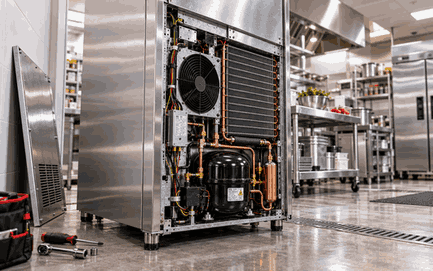
Reliable Hands Appliance provides professional commercial refrigerator repair in Newport Beach for restaurants, cafés, hotels, bakeries, grocery stores, retail businesses, office facilities, and managed commercial properties.
Reliable Hands Appliance provides professional commercial refrigerator repair in Newport Beach for restaurants, cafés, hotels, bakeries, grocery stores, retail businesses, office facilities, and managed commercial properties. Our technicians diagnose cooling failures, unstable temperatures, water leaks, excessive condensation, airflow restrictions, and electronic control problems affecting supported commercial refrigeration equipment.
A commercial refrigerator that cannot maintain the required temperature can disrupt food preparation, retail operations, and hospitality services while putting temperature-sensitive inventory at risk. However, a refrigerator that continues running is not necessarily cooling products correctly. Problems involving fans, temperature sensors, door gaskets, defrost components, or refrigeration systems may affect performance without completely stopping the equipment.
Our professional commercial refrigerator repair services focus on identifying the underlying malfunction and explaining appropriate repair options based on the equipment's condition and configuration.
Commercial refrigerator repair involves diagnosing and correcting cooling, airflow, drainage, electrical, temperature-control, and refrigeration problems affecting equipment used in business operations.
Reliable Hands Appliance accepts service requests involving:
Commercial refrigerator not cooling or maintaining the required temperature.
Cabinet temperature rising or fluctuating unexpectedly.
Uneven cooling between storage compartments.
Compressor running continuously or cycling unusually frequently.
Excessive condensation or recurring interior frost.
Water leaking inside or beneath the refrigeration cabinet.
Commercial refrigerator door not closing or sealing properly.
Clicking, rattling, grinding, or unusual fan noises.
Temperature alarms and recurring refrigerator error codes.
Unresponsive digital displays or electronic controls.
Slow temperature recovery after loading or door openings.
Commercial refrigeration systems contain interconnected components responsible for cooling, temperature regulation, airflow, defrost operation, drainage, and electronic control.
Depending on the reported symptoms, diagnosis may involve inspecting evaporator fans, condenser components, temperature sensors, electronic controls, door gaskets, defrost systems, electrical connections, and refrigeration components.
A refrigerator that runs continuously does not automatically have a defective compressor. Door-sealing problems, restricted ventilation, dirty condenser surfaces, and control faults can produce similar symptoms.
Our technicians evaluate the affected systems before recommending repair or component replacement.
When requesting commercial refrigerator repair in Newport Beach, provide the equipment manufacturer, complete model number, serial number, and commercial service address.
Explain whether the temperature problem appeared suddenly or gradually. Record the displayed temperature, active alarms, unusual noises, and the approximate time the malfunction began.
For businesses operating multiple refrigerators, identify the affected unit and its location within the property.
A commercial refrigerator may continue operating while its internal temperature gradually increases.
Possible causes include:
Restricted airflow inside the refrigeration cabinet.
Dirty or obstructed condenser components.
Malfunctioning evaporator or condenser fans.
Damaged door gaskets allowing warm air to enter.
Defective temperature sensors or thermostats.
Electronic control problems.
Defrost-related malfunctions.
Compressor or sealed refrigeration-system faults.
A working cabinet light, fan, or digital display does not confirm that refrigerated products are being stored at the required temperature.
Professional testing helps distinguish operating restrictions from electrical, mechanical, or refrigeration failures.
For additional troubleshooting information, read our guide on why a commercial refrigerator is not cooling properly.
Temperature instability can affect refrigerated ingredients, beverages, and other products stored inside commercial cabinets.
Possible contributing factors include frequent door openings, restricted ventilation, incorrect product loading, sensor failures, damaged seals, or inconsistent refrigeration performance.
Some temperature changes are normal during compressor cycling and equipment operation. However, repeated temperature increases or slow recovery under ordinary operating conditions require assessment.
Before requesting service, document:
Current displayed cabinet temperature.
Independent temperature readings when available.
Whether one compartment or the entire refrigerator is affected.
Approximate time the problem began.
Recent power interruptions.
Changes in loading or door use.
Active temperature alarms.
Unusual operating noises.
These details help identify patterns and guide the diagnostic inspection.
A commercial refrigerator may operate for unusually long periods when it cannot remove heat efficiently or maintain the selected temperature.
Potential causes include dirty condenser surfaces, poor ventilation, damaged door gaskets, excessive loading, sensor problems, or refrigeration-system faults.
Continuous running alone does not prove compressor failure.
If the cabinet continues warming despite extended operation, the equipment should be professionally inspected.
Commercial refrigerators depend on appropriate internal airflow to distribute cold air throughout the cabinet.
Blocked ventilation passages, overcrowded shelves, malfunctioning fans, or ice accumulation may prevent certain areas from maintaining consistent temperatures.
Equipment operators should keep products clear of designated air supply and return openings.
However, recurring uneven cooling under normal loading conditions may indicate a mechanical or electronic malfunction.
Excessive frost inside a commercial refrigerator can develop when moisture enters the cabinet or when defrost components fail to operate correctly.
Possible contributing factors include:
Damaged or worn door gaskets.
Doors remaining partially open.
Frequent exposure to humid air.
Defective defrost components.
Restricted evaporator airflow.
Malfunctioning fans or temperature sensors.
Coastal business environments may expose equipment to humid conditions, especially when refrigeration doors are opened frequently.
The location of ice buildup can provide diagnostic information, but frost patterns alone cannot identify the exact failed component.
Some commercial refrigerators use automatic defrost systems to manage ice accumulation around cooling components.
When these systems malfunction, ice can obstruct airflow, reduce cooling performance, and contribute to unstable cabinet temperatures.
Repeated removal of visible ice may provide temporary improvement without correcting the underlying problem.
Do not use knives, screwdrivers, sharp objects, or unapproved heating devices to remove ice from refrigeration equipment.
These methods can damage evaporator components, cabinet liners, electrical connections, or concealed refrigerant tubing.
Follow the manufacturer's procedures and request professional diagnosis when frost repeatedly returns.
Water collecting inside or underneath a commercial refrigerator may involve blocked drainage, condensation problems, damaged water connections, overflowing drain pans, or excessive frost accumulation.
The location of visible water does not always indicate where the malfunction originated.
For example, moisture may travel from internal drainage components before appearing beneath the cabinet.
Professional diagnosis helps identify the affected system and determine the appropriate repair.
Damaged door gaskets, worn hinges, or misaligned doors can allow warm air to enter the refrigeration cabinet.
Common symptoms include:
Condensation around the door opening.
Frost forming near door edges.
Extended compressor operation.
Slow temperature recovery.
Doors failing to close securely.
Uneven temperatures inside the cabinet.
Door and gasket problems can affect refrigeration performance even when the cooling system remains operational.
Commercial refrigerators produce normal sounds during compressor operation, fan movement, and temperature changes.
However, persistent grinding, rattling, scraping, repeated clicking, or abnormal vibration may indicate a developing mechanical or electrical problem.
Possible sources include fans, compressor-start components, loose parts, or other model-specific equipment.
Changes in noise accompanied by declining cooling performance should be professionally assessed.
Reliable Hands Appliance accepts repair requests for supported commercial refrigeration equipment used in professional kitchens, hospitality properties, and retail businesses.
Reach-in commercial refrigerators are commonly used in restaurants, bakeries, catering kitchens, and other food-service operations.
Possible repair concerns include temperature instability, excessive frost, damaged door seals, fan problems, water leaks, and electronic control faults.
Undercounter and worktop refrigerators are frequently installed in compact kitchens, preparation areas, and service stations.
Restricted installation space, surrounding heat sources, and ventilation limitations can affect equipment operation.
Diagnosis considers the cabinet configuration and access to service components.
Refrigerated preparation tables and commercial display refrigerators may have multiple storage areas or specialized temperature-control arrangements.
Common problems include uneven cooling, condensation, damaged doors, slow temperature recovery, and control failures.
For preparation tables, identify whether the malfunction affects the ingredient rail, lower storage cabinet, or both.
Some commercial facilities use walk-in coolers or refrigeration equipment with remote condensing units.
These systems may have components located in mechanical rooms, exterior areas, or on rooftops.
When requesting service, explain the equipment arrangement and component access requirements. Service eligibility must be confirmed for the specific system.
Reliable Hands Appliance accepts commercial refrigerator repair requests involving supported equipment from major commercial refrigeration manufacturers.
Our brand coverage includes Avantco, Beverage-Air, Hoshizaki, True, and Traulsen.
Different manufacturers use different temperature controllers, electronic sensors, defrost configurations, fan systems, and refrigeration components.
For example, a True refrigerator may require different diagnostic procedures from a Traulsen or Hoshizaki model displaying similar cooling symptoms.
Service availability depends on the specific model, equipment condition, installation requirements, and compatible replacement-part availability.
Providing the complete model and serial numbers helps determine which technical procedures and replacement components may apply.
The equipment identification plate usually contains important information about the manufacturer, model, serial number, and electrical or refrigeration specifications.
When safely accessible, a clear photograph of this plate can assist with service preparation.
Do not move heavy equipment, remove protective panels, or disconnect refrigeration components solely to locate identification information.
Modern commercial refrigeration equipment may display warnings involving cabinet temperature, sensors, condenser performance, defrost operation, or electronic controls.
The meaning of each error code depends on the manufacturer and controller generation.
On compatible True refrigeration systems:
HI or hi may indicate excessive cabinet temperature.
Con may identify a condenser-related warning.
LEA may indicate extended compressor operation.
For model-specific explanations, review our True commercial refrigeration error code guide.
Certain Traulsen controllers use:
cHI or HI CAB for high cabinet temperature.
CLn FL for condenser or filter maintenance warnings.
DEF Err for defrost-related faults.
More information is available in our Traulsen commercial refrigeration error code reference.
Other supported commercial refrigeration systems may display warnings related to cabinet temperature, electronic sensors, or condenser operation.
Explore our Hoshizaki commercial appliance error code guide, Beverage-Air error code reference, and Avantco commercial appliance error code guide.
An error code identifies a detected condition rather than confirming that one specific component has failed. Record the exact message and equipment model before resetting recurring alarms.
Commercial refrigeration problems can place temperature-sensitive products at risk before the equipment completely stops operating.
Businesses should prioritize inventory protection and established food-safety procedures while arranging equipment diagnosis.
When refrigeration performance declines:
Record the cabinet temperature and any active alarms.
Document when the problem was first observed.
Check relevant product temperatures using appropriate equipment.
Limit unnecessary refrigerator door openings.
Keep internal airflow passages unobstructed.
Transfer affected products to suitable operating refrigeration when necessary.
Follow the facility's established food-safety and inventory-control procedures.
The appropriate response to a temperature problem depends on the products involved, actual temperature history, duration of exposure, and applicable food-safety requirements.
A refrigeration technician diagnoses the equipment. Decisions about product safety, continued use, and disposal must follow the business's approved procedures and applicable regulations.
Do not assume that products remain safe simply because the cabinet still feels cool.
Reliable Hands Appliance accepts commercial refrigerator repair requests in Newport Beach from businesses relying on refrigerated storage for daily operations.
Restaurants and cafés depend on commercial refrigeration for ingredient storage, beverage service, and food preparation.
Cooling failures, temperature fluctuations, and water leaks can interrupt kitchen operations and place inventory at risk.
When requesting service, identify the affected refrigerator and its location within the kitchen or storage area.
Hotels and resorts may operate several commercial refrigerators across restaurants, banquet kitchens, employee facilities, and food-storage areas.
For properties with multiple appliances, provide the equipment location, model information, and relevant service-access instructions.
Food markets and retail businesses use commercial refrigerators to store chilled products and maintain normal sales operations.
Problems involving inadequate cooling, condensation, electronic alarms, or damaged doors can affect product storage and display conditions.
Professional diagnosis considers the refrigerator's operating environment, loading conditions, temperature history, and reported symptoms.
Office kitchens and managed commercial facilities may contain refrigeration equipment used by employees, tenants, or building operations.
Provide the property name, authorized contact, equipment location, and any access restrictions that may affect service.
Reliable Hands Appliance provides commercial refrigerator repair in Newport Beach across ZIP codes 92625, 92657, 92660, 92661, 92662, and 92663, subject to appointment and equipment availability.
Our commercial service areas include:
Newport Center
Fashion Island
Lido Marina Village
Mariner's Mile
Balboa Peninsula
Balboa Village
Corona del Mar
Newport Coast
Newport Beach Airport Area
Businesses operating additional refrigeration, cooking, or laundry equipment can explore our commercial appliance repair services in Newport Beach.
Commercial refrigeration equipment may be installed in waterfront restaurants, shopping centers, office buildings, secured kitchens, or hospitality properties.
Access conditions can vary considerably between locations.
Before requesting service, provide:
Complete business name and service address.
Suite number and equipment location.
On-site contact and authorized representative.
Parking and loading-zone instructions.
Service elevator requirements.
Gate access or security authorization.
Any restrictions affecting equipment inspection.
Detailed parking and access information is especially helpful for Balboa Peninsula, Balboa Island, and waterfront commercial properties.
Commercial refrigerator maintenance is planned inspection and care intended to identify developing problems and support consistent cooling performance.
Reliable Hands Appliance provides maintenance appropriate to supported commercial refrigeration equipment and manufacturer requirements.
Depending on the equipment model, maintenance may include:
Reviewing cabinet temperature performance.
Inspecting door gaskets and closure.
Checking accessible condenser ventilation.
Reviewing internal airflow conditions.
Looking for visible condensation or water leaks.
Listening for abnormal fan or compressor noises.
Inspecting accessible drainage components.
Reviewing irregular compressor cycling.
Checking recurring electronic warnings.
Businesses operating several refrigeration units may benefit from documented equipment inspections and temperature monitoring.
Routine maintenance helps identify changes in operating performance before they develop into more serious failures.
For additional guidance, review our commercial appliance preventive maintenance checklist.
Equipment operators should follow manufacturer-approved cleaning procedures and keep stored products clear of designated airflow passages.
Inspect visible door gaskets for damage and report recurring temperature changes promptly.
Avoid blocking ventilation openings or surrounding equipment clearances.
Routine maintenance can help identify developing wear and operating restrictions, but it cannot correct every active equipment malfunction.
Repeated warming, recurring frost, persistent leakage, temperature alarms, abnormal compressor operation, and electronic control failures require professional diagnosis.
Stop operating equipment that produces electrical sparks, burning odors, dangerous overheating, water leakage near electrical components, or visibly damaged wiring.
Do not bypass protective devices, open refrigerant lines, or attempt unauthorized electrical repairs.
Refrigeration systems using specialized refrigerants must be serviced by personnel with appropriate training and qualifications.
Contact Reliable Hands Appliance with the equipment manufacturer, model number, serial number, current cabinet temperature, reported symptoms, and business address.
Mention active alarms, changes in cooling performance, and any property-access restrictions.
The technician reviews the temperature history, reported symptoms, and equipment configuration.
Depending on the malfunction, diagnosis may involve cooling components, airflow, defrost systems, drainage, electrical connections, temperature sensors, and electronic controls.
Testing is performed only when the refrigerator can be operated safely.
After the diagnostic inspection, the technician explains the findings and recommended repair.
If replacement parts are necessary, availability depends on the equipment model and component requirements.
Same-day commercial refrigerator appointments may be available depending on technician scheduling, business location, property access, and equipment requirements.
Repair completion depends on the diagnosed malfunction, refrigerator condition, and compatible replacement-part availability.
Businesses operating several refrigeration systems may require assistance with additional equipment.
For freezing equipment experiencing temperature loss, excessive ice, defrost failures, or recurring alarms, explore our commercial freezer repair services in Newport Beach.
Our broader commercial appliance repair services throughout Orange County cover supported refrigeration, cooking, and laundry equipment.
Commercial appliance services are also available in nearby communities, including Irvine, Costa Mesa, and Santa Ana.
Appointment availability should be confirmed according to the equipment type, service address, and requested work.
Possible causes include restricted airflow, dirty condenser components, malfunctioning fans, temperature-sensor problems, damaged door gaskets, defrost failures, electronic controls, or refrigeration-system faults.
Professional diagnosis is necessary to identify the underlying malfunction.
Yes. Reliable Hands Appliance accepts repair requests involving supported commercial refrigerators with water leaks, condensation problems, drainage restrictions, and related equipment faults.
Stop using the affected equipment if water reaches electrical components or creates another safety concern.
Yes. Reliable Hands Appliance accepts service requests involving supported True, Traulsen, Hoshizaki, Avantco, and Beverage-Air commercial refrigeration equipment.
Service eligibility depends on the exact model, equipment condition, installation requirements, and compatible replacement parts.
Provide the business address, equipment brand, complete model and serial numbers, current temperature, displayed error codes, and a description of the malfunction.
Include property-access instructions and identify the affected refrigerator if several units are installed.
Same-day appointments may be available depending on technician scheduling, business location, equipment type, and property access.
Repair completion depends on the diagnosis and replacement-part availability.
No. Reliable Hands Appliance provides commercial refrigerator repair and maintenance only for the equipment covered by this service.
Commercial refrigerator installation is not included.
If your commercial refrigerator is not cooling properly, leaking water, developing excessive frost, producing unusual noises, or displaying recurring temperature alarms, Reliable Hands Appliance provides commercial refrigerator diagnostics, repair, and maintenance for supported equipment in Newport Beach.
Contact our team with the equipment manufacturer, complete model number, serial number, current temperature, reported symptoms, and business address to discuss service availability.
You can also contact Reliable Hands Appliance to request a commercial refrigerator repair appointment.
Business Name: Reliable Hands Appliance
Phone: +1 (714) 338-9438
Email: [email protected]
Address: 410 Santa Maria, Irvine, CA 92606, United States
Hours: Monday – Saturday: 8:00 AM – 7:00 PM | Sunday: Closed