410 Santa Maria, Irvine, CA 92606
E-mail us: [email protected]
7 Days a Week

An LG refrigerator FF error indicates that the freezer fan is not operating normally, often because of ice buildup. Discover how door-seal problems, restricted airflow, and recurring frost affect cooling, along with safe defrost instructions and signs that professional repair is necessary.
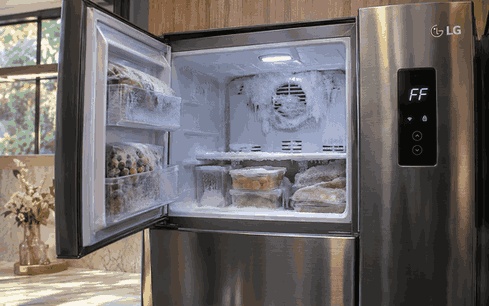
An LG refrigerator FF error code indicates that the freezer fan is not operating normally.
An LG refrigerator FF error code indicates that the freezer fan is not operating normally. Depending on the model, the display may show Er FF, E FF, or FF. Ice buildup around the fan can prevent it from rotating, disrupting cold-air circulation and affecting freezer performance.
The warning does not automatically mean the fan motor has failed. Before attempting a reset, check food-storage temperatures, inspect accessible door seals, and follow LG's model-specific defrost instructions.
The FF error on an LG refrigerator identifies abnormal freezer fan operation. This fan circulates cold air throughout the freezer and, depending on the refrigerator design, supports airflow between compartments.
When frost obstructs the fan, cooling performance may deteriorate even while the compressor continues running.
LG's official troubleshooting guidance identifies ice accumulation around the freezer fan motor as a common cause.
However, FF does not independently confirm a defective fan motor. Identifying the actual cause requires evaluating the refrigerator's symptoms and operating conditions.
For other manufacturer-specific warnings, explore our LG appliance error code guide.
Several conditions can interfere with freezer fan operation, ranging from excessive frost to electrical or defrost-system problems.
One of the most common causes of LG refrigerator Er FF is frost accumulating around the freezer fan.
Ice can form behind interior panels and prevent the fan blades from rotating normally.
Possible symptoms include:
Unusual humming or buzzing from the freezer.
Reduced airflow through internal vents.
Inconsistent compartment temperatures despite continued refrigerator operation.
Visible frost accumulation near accessible air outlets.
However, concealed ice may not be visible without removing internal panels. A freezer that looks relatively clear can still have frost around its fan assembly.
A food package, misaligned drawer, or damaged door gasket can prevent the freezer from sealing completely.
When warm, humid air enters the compartment, moisture can accumulate and freeze around concealed cooling components.
Check the door opening for obstructions and inspect accessible gasket surfaces for damage, dirt, or visible gaps.
Correcting a door-closure problem may help prevent recurring frost formation.
Overpacking the freezer can interfere with normal air circulation.
Food packages placed directly against ventilation openings may restrict airflow and contribute to uneven temperatures.
Leave appropriate clearance around visible air outlets and avoid forcing additional items into overcrowded compartments.
Do not remove interior covers or reach into concealed fan areas to clear obstructions.
If FF continues after the permitted troubleshooting steps, the problem may involve the freezer fan motor, wiring, electronic controls, or defrost-related components.
Recurring frost can also indicate that another malfunction is allowing ice to accumulate repeatedly.
These possibilities require model-specific diagnosis. Replacing the fan without confirming its condition may leave the underlying problem unresolved.
Before attempting to clear the error, check whether the refrigerator is maintaining safe temperatures and whether an accessible operating condition may be contributing to the warning.
Use an appliance thermometer to check both compartments.
For proper food storage:
Refrigerator: 40°F (4°C) or below.
Freezer: Approximately 0°F (-18°C).
The selected temperature on the control panel does not guarantee that food is being stored safely.
If temperatures are rising, transfer vulnerable perishables to another working refrigerator or suitable temperature-controlled storage.
Check whether packages or drawers are preventing the freezer door from closing completely.
Inspect visible gasket surfaces and look for unusual ice accumulation near accessible ventilation openings.
Note whether the problem developed after the freezer was heavily loaded or its door remained partially open.
Do not remove fixed freezer panels, force frozen drawers, or reach toward concealed fan blades.
The evaporator area may contain electrical components and refrigeration lines that can be damaged by improper handling.
If the suspected obstruction is inaccessible, professional refrigerator diagnostics and repair may be necessary.
LG's September 2026 troubleshooting instructions recommend allowing accumulated ice to melt naturally on applicable refrigerators displaying Er FF or E FF.
Transfer refrigerated and frozen food to appropriate temporary storage.
Place towels around the refrigerator to collect meltwater.
Safely disconnect the appliance from electrical power.
Leave both refrigerator and freezer doors fully open for at least 24 hours.
Once the ice has completely melted, dry any remaining moisture before reconnecting power.
Restore power and monitor the refrigerator's cooling performance.
LG notes that the compartments may require 24–48 hours to return to normal operating temperatures after reconnection.
Other LG guidance may specify different minimum defrost periods. Always follow the instructions appropriate for your exact refrigerator model.
Never use a hair dryer, sharp tool, or direct heat to accelerate ice removal.
Excessive heat can damage interior plastic components, while sharp objects may puncture concealed refrigeration lines.
A complete defrost may remove the ice blocking the fan, but it does not necessarily correct the reason the frost developed.
If the LG FF error keeps returning after the freezer has been defrosted, the underlying problem may remain unresolved.
Potential causes include recurring moisture intrusion, poor door sealing, defrost-system faults, or abnormal fan operation.
Record how long the refrigerator cooled normally after defrosting, where frost reappeared, and whether unusual noises developed.
Our guide explaining why a refrigerator is not cooling covers related airflow, temperature-control, and defrost problems.
Professional diagnosis can determine whether the issue involves the fan assembly, related controls, or another component before replacement parts are selected.
LG refrigerators use different warnings for separate fan systems. Although these codes may appear similar, they do not identify the same problem.
FF: Abnormal freezer fan operation.
rF: Refrigerator-compartment fan problem.
IF: Ice-maker fan problem on applicable models.
CF: Condenser fan problem.
A freezer defrost procedure should not automatically be applied to a condenser-fan fault.
The complete displayed warning and refrigerator model number are essential for choosing the appropriate troubleshooting procedure.
Yes. If ice was preventing freezer fan rotation, allowing it to melt may restore normal operation.
However, a cleared display does not prove that the underlying cause has been permanently corrected.
No. FF concerns freezer fan operation, not a confirmed compressor failure.
The compressor may continue running while airflow is restricted. Compressor replacement should never be recommended based solely on the FF warning.
Check actual temperatures rather than relying on the refrigerator's display or whether stored food feels cold.
If cooling is unreliable, protect temperature-sensitive food and request professional assistance.
Frost interfering with fan rotation may produce humming, buzzing, or other unusual operating sounds.
However, noise alone cannot confirm the source of the problem. Record when the sound occurs and whether cooling performance has changed.
Reliable Hands Appliance provides residential refrigerator diagnostics and repair throughout Irvine, Costa Mesa, Newport Beach, Santa Ana, Tustin, and surrounding Orange County communities.
Our LG appliance repair services in Orange County address freezer fan problems, excessive frost, airflow restrictions, temperature irregularities, and electronic faults.
For homeowners in Newport Beach, additional service information is available through LG appliance repair in Newport Beach and local refrigerator repair.
If the problem specifically affects freezing performance or recurring frost buildup, explore our residential freezer repair services.
When requesting assistance, provide your LG refrigerator model number, exact FF warning, compartment temperature readings, and details about previous defrost attempts.
This information helps identify the affected cooling system and determine which components require inspection.
If your LG refrigerator continues displaying FF, develops recurring frost around the freezer fan, or cannot maintain reliable cooling temperatures, contact Reliable Hands Appliance to request professional diagnosis and repair.
Business Name: Reliable Hands Appliance
Phone: +1 (714) 338-9438
Email: [email protected]
Address: 410 Santa Maria, Irvine, CA 92606, United States
Hours: Monday – Saturday: 8:00 AM – 7:00 PM; Sunday: Closed