410 Santa Maria, Irvine, CA 92606
E-mail us: [email protected]
24 Hour Service - 7 Days a Week

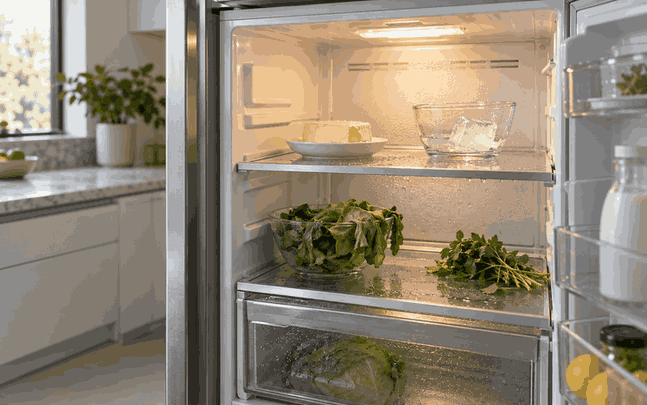
A refrigerator that is not cooling may have an airflow restriction, dirty condenser coils, failed fan, damaged door seal, defective sensor, defrost problem, or sealed-system fault.
A refrigerator that is not cooling properly may have blocked airflow, dirty condenser coils, damaged door seals, faulty fans, excessive frost, temperature-sensor problems, or a refrigeration-system failure.
Before assuming the compressor has failed, determine whether only the refrigerator compartment is warm or both the refrigerator and freezer are losing cooling.
The difference helps identify which systems require attention.
Food safety comes first when refrigerator temperatures rise.
According to USDA guidance, refrigerators should maintain 40°F (4°C) or below, while freezers should remain around 0°F (-18°C).
Use an appliance thermometer rather than relying only on the displayed temperature setting.
Keep doors closed and move temperature-sensitive food to working refrigeration when necessary.
USDA guidance recommends discarding perishable food that has remained above 40°F for more than two hours. Do not taste food to determine whether it is safe.
Some refrigerators have Demo Mode, Showroom Mode, or Cooling Off settings that disable refrigeration while leaving lights and displays operational.
Confirm the selected temperatures and check for unfamiliar operating modes.
Follow manufacturer instructions rather than entering undocumented diagnostic settings.
Food packages and overcrowded shelves may obstruct supply vents, return-air passages, or dampers.
On many refrigerator-freezer designs, cold air moves from the freezer area into the fresh-food compartment.
Restricted airflow can leave the freezer cold while the refrigerator becomes warm.
Move items away from visible ventilation openings.
The condenser releases heat removed from the refrigerator.
Dust, pet hair, and debris around accessible condenser surfaces can reduce heat transfer and contribute to longer operating cycles.
Follow manufacturer-approved cleaning procedures. Do not remove protective electrical panels or disturb refrigerant tubing.
A worn or misaligned door seal allows warm, humid air into the cabinet.
This can cause condensation, frost buildup, extended compressor operation, and inconsistent cooling.
Inspect visible gaskets and remove items that prevent proper door closure.
If water also collects beneath the appliance, read Why Is My Refrigerator Leaking Water?.
The evaporator fan circulates cold air, while the condenser fan assists heat removal on applicable models.
Faults may produce unusual noises, uneven temperatures, or poor cooling.
Some fans intentionally stop when doors open, so intermittent operation alone does not confirm a failure.
A faulty defrost heater, temperature sensor, wiring connection, or electronic control may allow excessive frost around the evaporator.
Ice can restrict airflow and gradually warm the refrigerator compartment.
Never chip ice away with sharp tools. Hidden refrigeration lines and electrical components may be damaged.
A defective start relay, inverter, sensor, wiring connection, compressor, or sealed-system component may interrupt cooling.
Repeated clicking, extended operation without temperature improvement, or both compartments warming may indicate a serious problem.
However, these symptoms do not automatically confirm compressor failure.
Refrigerant testing and sealed-system repairs require qualified technicians.
Modern refrigerators may display warnings involving fans, sensors, defrost operation, compressors, or electronic communication.
Examples on compatible models include:
LG: ER FF indicates a freezer-fan problem, ER rF concerns the refrigerator fan, and dH relates to defrosting. See LG Error Codes.
Samsung: 21E concerns the freezer fan, 22E/22C the refrigerator fan, and 83E/85E/86E compressor-related electrical conditions. Review Samsung Error Codes and Samsung Appliance Repair.
Sub-Zero: EC40/EC50 may indicate excessive compressor runtime, while EC05–EC08 concern temperature sensing on supported Legacy models. See Sub-Zero Error Codes and Sub-Zero Appliance Repair.
Viking: Certain refrigerators display HI or HH for high compartment temperatures. Consult Viking Error Codes.
Error codes identify detected conditions, not necessarily failed components. Record the complete warning and model number before resetting the refrigerator.
Measure refrigerator and freezer temperatures.
Confirm the operating mode and temperature settings.
Check door closure and accessible gaskets.
Move food away from internal vents.
Inspect manufacturer-accessible condenser areas for debris.
Record frost buildup, unusual noises, and displayed codes.
Do not open electrical compartments, remove fixed evaporator panels, or handle refrigeration lines.
This symptom often involves air distribution, an evaporator fan, blocked damper, excessive frost, or a temperature sensor.
If both compartments are warming, the problem may involve broader cooling-system operation.
For independent freezers and freezer columns, professional freezer repair may be appropriate.
Professional refrigerator repair is appropriate when temperatures continue rising, frost repeatedly returns, unusual compressor noises develop, or error messages persist.
A technician can inspect fans, sensors, dampers, defrost components, compressor controls, and refrigeration-system performance.
For restaurants and commercial facilities, review Commercial Refrigerator Not Cooling, which addresses additional food-storage requirements.
Possible causes include dirty condenser coils, door leakage, airflow restrictions, sensor faults, or reduced refrigeration performance.
A manufacturer-approved reset may clear a temporary control fault, but it cannot repair a failed fan, compressor, sensor, or damaged refrigeration system.
No. Airflow, electronic controls, fans, and defrost problems can also prevent cooling.
For professional refrigerator cooling diagnostics and repair, contact Reliable Hands Appliance.
Phone: +1 (714) 338-9438
Email: [email protected]
Office Hours: Monday through Friday, 7:00 AM to 7:00 PM
Saturday: 9:00 AM to 6:00 PM
Sunday is reserved for emergency calls. Call to confirm availability.
Office: 410 Santa Maria, Irvine, CA 92606
Time Zone: Pacific Time

